
In the era of smart technology, communication between devices is more important than ever. Smooth and dependable data interchange is crucial for both performance and safety in anything from Internet of Things (IoT) systems to electric vehicles (EVs). The CAN (Controller Area Network) protocol is essential in this situation. Because of its effectiveness, resilience, and real-time capabilities, CAN which was first created for automotive systems has evolved into a common communication protocol. FITA Academy offers specialized Embedded Systems training programs that help individuals develop hardware and software integration skills, design efficient systems, and understand core concepts like microcontrollers and real-time processing.
It facilitates efficient communication between various EV components, such as batteries, sensors, and control units. It guarantees reliable connectivity between devices in intricate settings in the Internet of Things. For both engineers and IT fans, knowing the CAN protocol is becoming increasingly important as businesses continue to move toward automation and connection.
Understanding What the CAN Protocol Is and How It Works
Multiple electronic devices, referred to as nodes, can interact with one another without the need for a central computer thanks to the CAN protocol. CAN employs a broadcast mechanism, which allows all nodes on the same network to transmit and receive messages, as opposed to a master-slave architecture. Every communication has an identification that establishes its priority.
The system uses arbitration to determine which message receives precedence when numerous devices try to send data at the same time without losing any data. Because to this, CAN is very dependable and efficient. Frames, which contain information like the message ID, data length, and actual data, are used to transmit data. CAN is frequently utilized in settings where dependability is crucial because to its error detection and fault tolerance features.
Key Features and Advantages of CAN in EVs and IoT
The durability and efficiency of CAN are major factors in its widespread adoption. It provides real-time communication, which is essential for systems like EVs that require quick reactions. Additionally, CAN’s robust error detection systems guarantee data integrity even in noisy settings. The fact that CAN uses less wiring than conventional communication systems, which lowers cost and complexity, is another significant benefit. Embedded System Courses in Chennai provide practical training programs that help individuals gain hands-on experience in hardware and software integration, and build real-time system development skills.
Additionally, it facilitates multi-master communication, which allows several devices to start data transfers. Because of its dependability and low power consumption, CAN is prized in IoT systems and is perfect for embedded devices. Furthermore, CAN networks are scalable, enabling the addition of new devices without requiring significant modifications. Because of these characteristics, CAN is a favored option for industrial and automotive applications.
Architecture of CAN Networks: Nodes, Messages, and Frames
A CAN network is made up of various parts that cooperate to facilitate communication. Nodes, which are discrete devices like sensors, actuators, or control units, are the main components. A two-wire bus system that transmits data signals connects these nodes. Messages are used for communication and are sent to every node in the network. The identification, control bits, data payload, and error-checking information are among the fields that make up each message’s frame structure.
In order to prioritize messages during transmission, the identification is essential. Differential signaling, which CAN employs, increases noise protection and guarantees dependable data transport. Designing and debugging CAN-based systems in EVs and Internet of Things applications requires an understanding of this architecture.
Role of CAN Protocol in Electric Vehicles
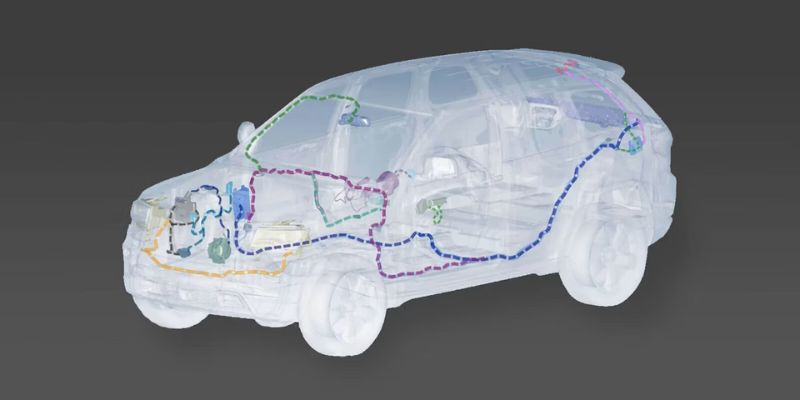
The CAN protocol serves as the foundation for communication between different subsystems in electric vehicles. It links vital parts such sensors, motor controllers, charging systems, and the Battery Management System (BMS). To ensure safe and effective functioning, the BMS, for instance, employs CAN to monitor battery health, temperature, and charge levels. In a similar vein, motor controllers use CAN communications to modify torque and speed in response to driver input. B School in Chennai can significantly boost your career by enhancing your embedded systems skills, including hardware-software integration, microcontroller programming, and real-time system development expertise.
Additionally, real-time diagnostics made possible by CAN enable personnel to promptly detect and resolve problems. It would be very challenging to manage the intricate relationships between EV components without CAN. It is essential to contemporary electric vehicles because of its capacity to deliver synchronized, quick, and dependable communication.
Applications of CAN Protocol in IoT Systems
Despite having its roots in the automobile sector, CAN has found extensive use in Internet of Things systems. CAN is used in industrial IoT to link machines, sensors, and control systems for monitoring and automation. The dependability of CAN also helps smart devices including medical equipment, agricultural sensors, and home automation systems.
For example, CAN can be used to manage several machines in a smart factory, guaranteeing effective manufacturing operations. It is appropriate for industrial applications where other protocols might not work because of its capacity to function in challenging conditions. Furthermore, CAN is perfect for real-time IoT applications due to its high reliability and low latency. CAN is still a great option for embedded and mission-critical devices as the Internet of Things grows.
Step-by-Step Approach to Learning CAN Protocol
If you approach learning the CAN protocol methodically, it can be simple. Learn the fundamentals of communication protocols and embedded systems first. Next, learn about data transmission and the format of CAN messages. Since practical experience is crucial, think about experimenting with CAN communication using development boards or simulation tools. It is important to know about the components of Embedded system. Discover how to examine data frames and set up CAN controllers.
Proceed gradually to more complex subjects like network optimization and fault management. Documentation, classes, and online tutorials can all offer helpful advice. Working on practical projects, like constructing a basic will network, will greatly improve your comprehension. Gaining proficiency with the CAN protocol requires constant practice and experimenting.
Common Tools and Software for CAN Development
Developers can work with the CAN protocol with a variety of tools and software. You can monitor and troubleshoot network connection using hardware tools like USB-to-CAN adapters and CAN analyzers. CAN networks are frequently simulated, tested, and analyzed using software tools like CANoe and CANalyzer. A flexible development environment is offered by open-source tools such as SocketCAN (for Linux platforms).
These technologies aid in performance optimization, error detection, and data frame visualization. Furthermore, development projects frequently employ microcontrollers with integrated CAN capability. Learning and using CAN can be made more simpler and more effective by selecting the appropriate tools.
Challenges, Limitations, and Future Scope
The CAN protocol has some drawbacks despite its benefits. Its low data rate in comparison to contemporary communication protocols is one of the primary issues. Applications that need fast data transfer may find this to be a limitation. Additionally, controlling message priorities might get more difficult as networks get bigger. Because typical CAN networks do not have encryption built in, security is another issue.
However, by providing faster communication rates and bigger payloads, innovations like CAN FD (Flexible communication Rate) are overcoming some of these restrictions. It is anticipated that CAN will continue to develop in tandem with new technologies in the future. It will continue to be useful for many years to come because to its integration with cutting-edge IoT and EV technologies.
Building a Strong Foundation in CAN Protocol
Anyone interested in EVs and IoT technologies must comprehend the CAN protocol. It is a key component of contemporary embedded systems because of its capacity to deliver dependable, real-time communication. You can develop a solid foundation in this crucial technology by studying how CAN functions, investigating its design, and obtaining practical experience.
Knowing CAN will provide you an advantage whether you want to work in industrial automation, IoT development, or automotive engineering. The need for qualified experts in this industry will only grow as technology develops further. Discover new possibilities in the realm of interconnected systems by beginning your educational journey now.