
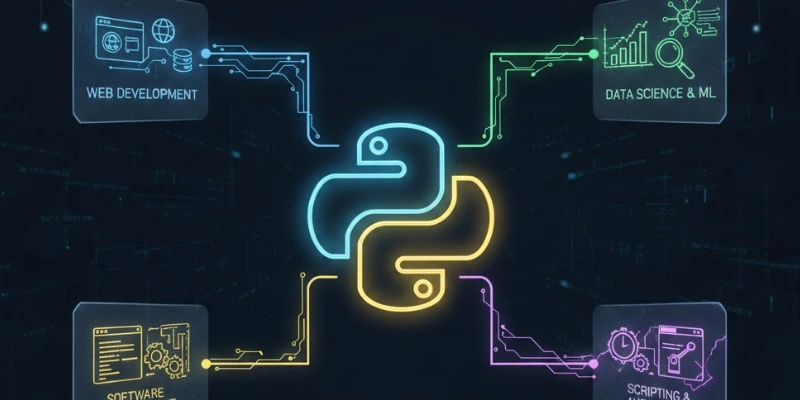
People often hear “Python” and think it’s just one simple programming language. But when you start learning it seriously, you realize Python isn’t just about syntax or writing small scripts. It supports different ways of thinking and different programming styles, which is why it fits into so many careers. Many beginners who explore Python Course in Trichy discover that Python isn’t one fixed approach, it’s a flexible language that can be used in multiple styles depending on the problem, the job role, and the industry.
Procedural way of using Python
This is usually how most people start. Procedural Python focuses on writing step-by-step instructions. You write code in a sequence, and each line runs in order. It feels natural because it’s like giving instructions to a computer. This style is common in small programs, automation scripts, and beginner projects. It helps learners understand logic, flow control, conditions, and loops clearly. Many testing tools, data scripts, and basic applications still use this style because it’s simple and easy to maintain.
Object-oriented style in Python
Object-oriented Python is about building programs using objects and classes. Instead of writing everything as steps, you organize code around real-world ideas like users, products, files, or systems. Each object has its own data and behavior. This style is common in software development, application design, and large systems. It helps teams manage complex projects better. If someone is also learning other languages, such as Java Course in Trichy, they usually find this style familiar because object-oriented thinking exists across many modern programming languages.
Functional programming approach
Python also supports functional programming ideas. This means writing code using functions that work on data without changing it directly. The focus is on clean logic, reusable functions, and predictable outputs. This style is often used in data science, machine learning, and analytics because it reduces errors and makes code easier to test. It may feel different for beginners at first, but it helps build strong thinking skills. Over time, it improves code quality and problem-solving clarity.
Scripting and automation use
One of Python’s biggest strengths is scripting. This is where Python is used for automation rather than full software systems. People write scripts to rename files, automate reports, scrape data, manage servers, and handle repetitive tasks. This style is practical and job-focused. Many IT roles use Python scripting daily even if they are not software developers. It saves time and reduces manual work. For many professionals, Python starts as a scripting tool before becoming a deeper programming skill.
How these styles connect to careers
The four types are not separate boxes you often use them together. A real project may use procedural logic, object structures, functional ideas, and scripting tasks in the same system. This flexibility is why Python fits into so many roles like testing, data analysis, AI, automation, web development, and cloud work. As job markets grow, learning paths like Python Course in Erode show how regional opportunities also value multi-style Python skills, not just basic coding knowledge.
Choosing the right style as a learner
Beginners don’t need to master all styles at once. Most people start procedural, move into object-oriented thinking, and slowly understand functional ideas. Scripting usually comes naturally through practice. The key is not choosing one type, but understanding when to use each. Interviews often test this mindset rather than just syntax. Employers look for problem-solving ability and logic, not just code writing speed. Python supports learning at your own pace, which makes it beginner-friendly but also powerful for long-term careers.
Python isn’t divided into four rigid categories, but it clearly supports four major ways of thinking and working: procedural, object-oriented, functional, and scripting. This is what makes it such a strong career language. You don’t outgrow Python, you grow inside it. As your skills expand, Python grows with you. When people combine flexible thinking with structured learning paths and long-term planning, even skills learned alongside fields like Python Course in Salem start to connect into strong, future-ready tech careers.
Also Check: Reasons Why Python is so Popular