
Running a business today means dealing with fast-changing technology, growing data, and constant customer expectations. Many professionals start learning cloud platforms not because it sounds trendy, but because their workplace systems feel outdated or hard to manage. When someone begins exploring AWS Training in Trichy, the curiosity usually comes from a simple question: how do businesses actually use cloud services to run faster, safer, and smarter without building everything from scratch?
Computing and virtual infrastructure
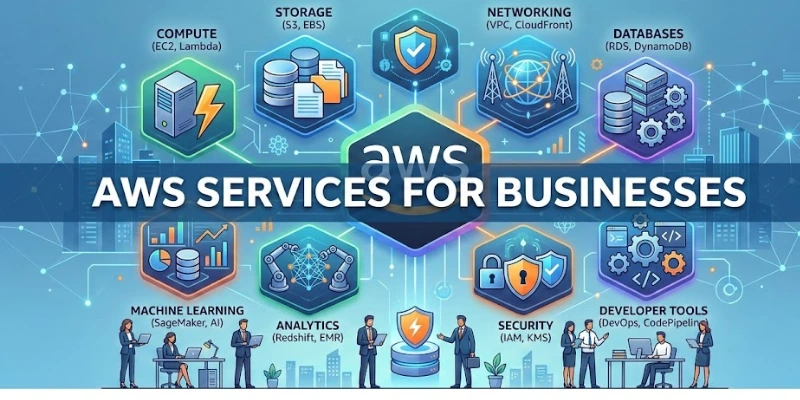
AWS provides computing services that let businesses run applications without owning physical servers. Virtual machines, auto-scaling systems, and load balancers help companies handle traffic without crashes. Small startups and large enterprises use these tools to deploy apps quickly and adjust resources based on demand. This setup removes the stress of hardware management. Teams focus more on building features instead of fixing machines, which changes how IT departments work in real companies.
Storage and data handling
Businesses generate huge amounts of data every day. AWS offers cloud storage services that handle files, backups, and archives securely. Companies store documents, media files, logs, and system data without worrying about physical storage limits. Data access becomes faster and easier for teams. Storage services also help with disaster recovery planning, which is critical for business continuity and long-term reliability in real operational environments.
Databases and data services
AWS provides managed database services for both structured and unstructured data. Businesses use these databases for websites, apps, billing systems, and internal tools. The advantage is that AWS handles maintenance, updates, and scaling. Teams don’t need deep infrastructure management skills to run databases. Learning how cloud databases work becomes much easier when connected with practical skill-building paths like Cloud Computing Courses in Trichy, where theory meets real system usage.
Security and access management
Security is one of the biggest concerns for businesses moving to the cloud. AWS offers identity management, encryption, access controls, and monitoring services to protect systems. These tools control who can access data and how systems communicate. Companies use layered security instead of relying on a single protection method. This approach helps reduce risks from internal errors and external threats, making systems safer without slowing down work.
Application development tools
AWS supports developers with services for building, testing, and deploying applications. These include development environments, automation tools, and serverless computing options. Businesses use these tools to launch products faster and update systems without downtime. Development cycles become shorter and more flexible. Teams can experiment, test ideas, and improve services without heavy infrastructure planning, which supports innovation inside organizations.
Analytics and business insights
AWS also provides analytics services that help businesses understand their data. Companies track customer behavior, system performance, and business trends using cloud analytics tools. This helps leaders make better decisions based on real data instead of guesswork. These services are useful across industries like retail, healthcare, finance, and logistics. As cloud adoption grows, skills linked with AWS Training in Erode often connect directly to local job markets and business needs.
AI and automation services
AWS offers artificial intelligence and automation tools that help businesses improve efficiency. These services support chatbots, recommendation systems, image recognition, and automated workflows. Companies use AI to improve customer support and internal processes. Automation reduces manual work and human error. Even small businesses can use advanced tech without building everything from zero, which changes how digital transformation happens across industries.
AWS services are not just technical tools; they shape how businesses think, plan, and grow. From infrastructure to data, security to automation, everything works as a connected system. Learning these services builds more than cloud knowledge, it builds system thinking. This mindset prepares people for long-term tech careers where adaptability matters more than tools. Those who grow with this understanding stay relevant as technology evolves, especially when skills align with future-focused learning paths like Cloud Computing Courses in Erode that support career stability and growth.
Also Check: The Most Quintessential Characteristics of AWS and Cloud Services