
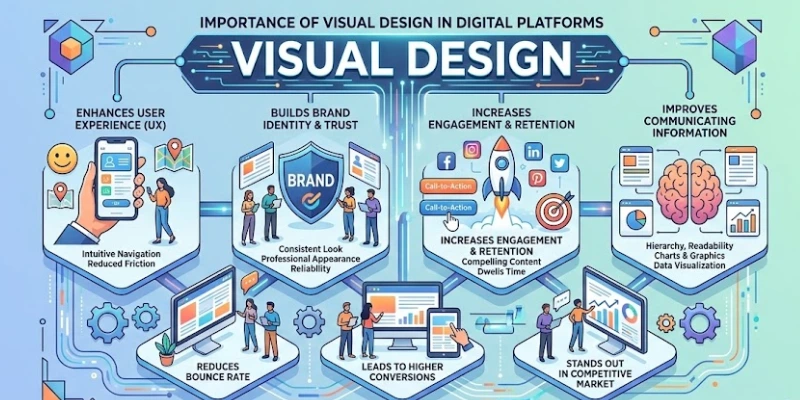
I used to think visual design was just about making things “look nice,” until I started working on real digital projects and saw how often poor design confused users, slowed adoption, and hurt trust. Even strong products fail when people don’t feel comfortable using them. That learning curve pushes many beginners to take design more seriously as a career skill, not just a creative hobby. It’s the same curiosity that leads people toward structured learning paths like Graphic Design Courses in Trichy, where design starts to feel practical rather than abstract.
First impressions shape user trust
When someone opens an app or website, they form an opinion in seconds. Colors, spacing, fonts, and layout silently communicate whether the platform feels reliable or messy. Users don’t analyze design logically they react emotionally. If a platform looks confusing, people assume it will be hard to use. Good visual design builds comfort and trust without saying a word. This matters for banking apps, learning platforms, and business tools where trust is everything.
Design and user behavior
Visual design guides how people move through a platform. Buttons, icons, contrast, and layout tell users what to click and where to go next. If everything looks the same, users get lost. Clear design creates a natural flow that feels simple even when systems are complex. This is why design is tied closely to user experience. It’s not decoration; it’s guidance. Designers who understand this build platforms that feel easy without users needing instructions.
Branding and digital identity
A platform’s design is its personality. Colors, typography, and visual style shape how people remember a brand. Consistent design builds recognition and emotional connection. When users see the same visual style across apps, websites, and social platforms, it creates familiarity. This matters for companies trying to stand out in crowded markets. Visual design becomes a business tool, not just an artistic choice.
Design as a career skill, not just creativity
Many people think design is only for creative personalities. In reality, visual design is a structured skill that mixes logic, psychology, and communication. Designers solve problems, not just make layouts. This is why design connects naturally with other digital fields. Learners who move between design and tech roles, such as those combining visual skills with Digital Marketing Course in Trichy, often become more versatile professionals who understand both systems and users.
Visual design in business platforms
Design is not limited to consumer apps. Business dashboards, admin panels, and enterprise tools depend heavily on clean visual structure. Employees use these systems daily, and poor design slows work and increases mistakes. Clear layouts improve productivity and reduce training time. This is why companies now care deeply about design quality even in internal software. It directly affects efficiency, not just appearance.
Regional opportunities and growing demand
Design careers are no longer limited to metro cities. Regional startups, training centers, and digital businesses are creating demand for designers who understand real platform needs. Local businesses now invest in digital identity, websites, and apps. People learning through paths like Graphic Design Courses in Erode often find opportunities in education platforms, e-commerce, and service-based startups that need practical design skills more than fancy visuals.
Design and long-term digital careers
Visual design shapes how digital platforms evolve. As technology grows, design helps people adapt to complexity without feeling overwhelmed. AI tools, cloud platforms, and data systems all rely on clean interfaces to stay usable. Designers who understand systems thinking grow into product designers, UX leads, and digital strategists. Visual design becomes a foundation for leadership roles in tech teams, not just a creative job.
Visual design matters because it connects people to technology in a human way. It makes systems usable, trustworthy, and intuitive. For anyone building a digital career, design literacy changes how you think about platforms, users, and business problems. It supports growth across multiple roles and industries, especially when combined with broader digital skills like those developed through Digital Marketing Course in Erode, where understanding users, platforms, and communication all come together for future-ready careers.
Also Check: Roles and Responsibilities of Graphic Designers?